


See video: Female Killer Whales Take the Lead
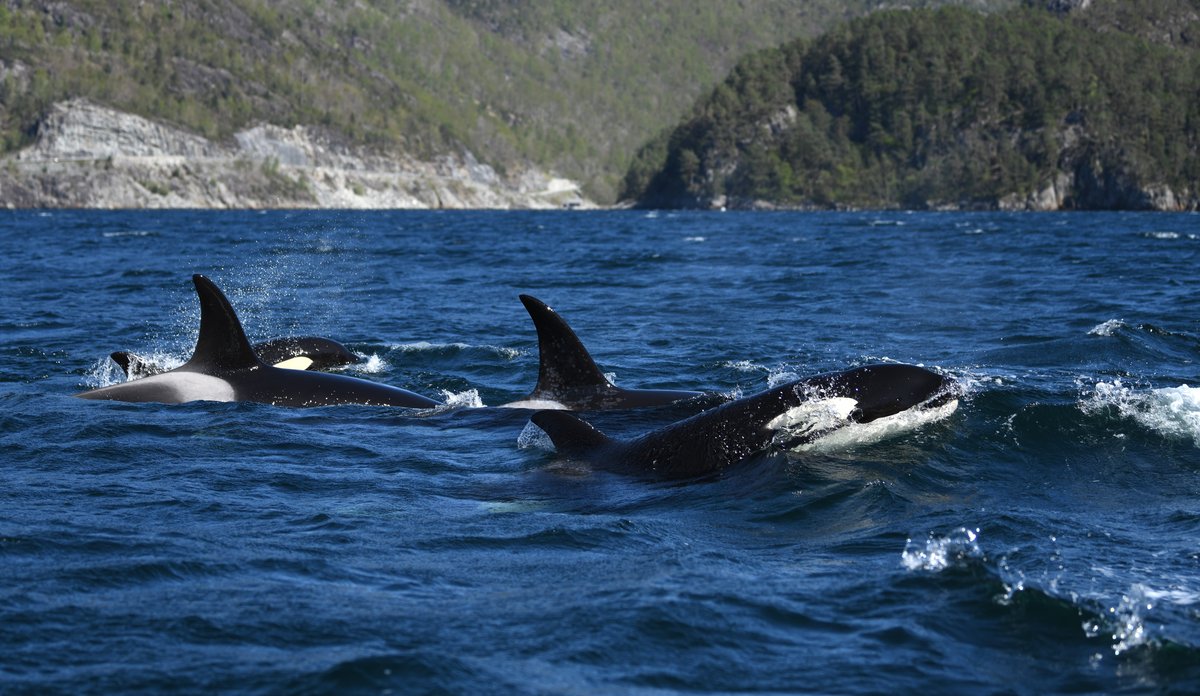
Collective decisions influence how killer whales coordinate, allocate resources, and respond to environmental change — and ultimately who survives and reproduces.
Photo: Carla Freitas / HavforskingsinstituttetPublished: 27.10.2026
“It is the adult females that most often initiate a deep dive,” says marine researcher Carla Freitas.
In more than 80 percent of the collective deep dives observed Hardangerfjord, a female initiated the dive. The others in the group followed — quickly and in an orderly fashion.
This may be an important trait under environmental change.
Faced with climate change, human impacts, or changes in food availability, killer whales depend on rapid and effective decision-making.
In such situations, clear leadership may be key.
See examples of the observed group behaviour:
The hierarchy
The findings are based on drone observations in Hardangerfjord collected from February to April 2025. The results were recently published in Animal Behaviour.
“In total, we collected 594 minutes of drone footage of the different killer whale groups,” says marine biologist Marie-Laure Veys. She is the lead author and lived in Ulvik for three months during the fieldwork for her master’s project at the Institute of Marine Research.
The fjords of western Norway are popular habitats for killer whales during the spring, and many of the whales return year after year.
Killer whales are social animals that live in closely connected family groups, composed of mothers and their offsprings. However, determining the internal hierarchy of these groups can be challenging.
“We have investigated how killer whales make collective decisions and the more subtle social interactions between them,” says Veys.
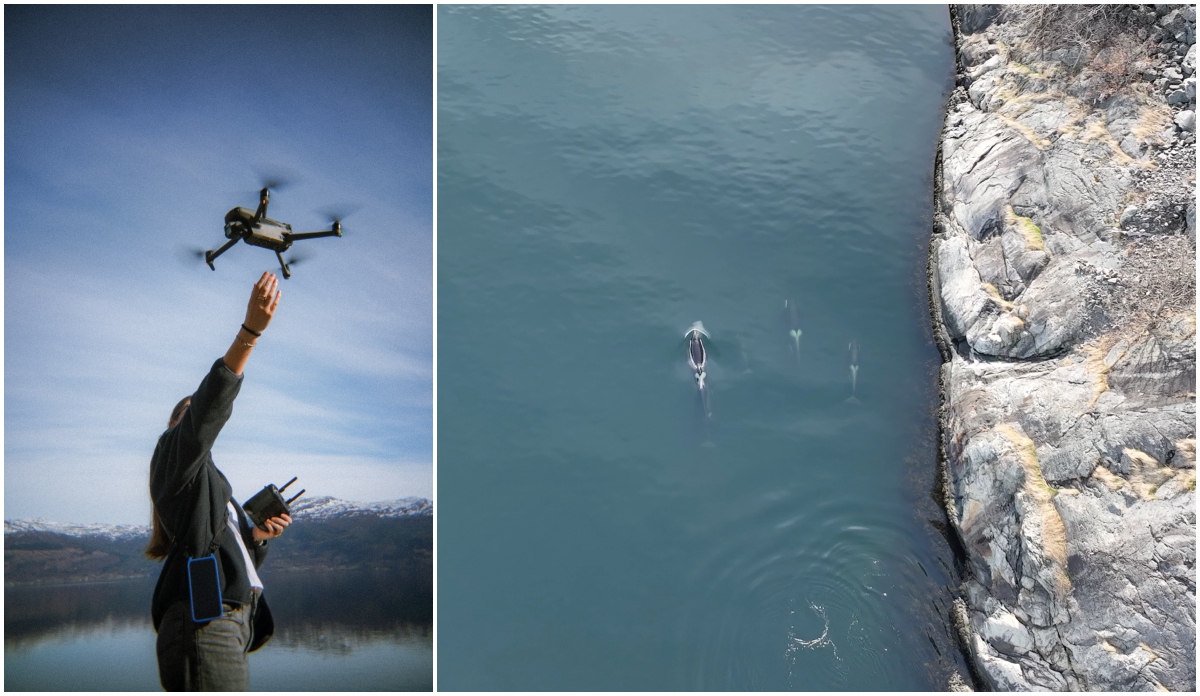
Foto: Juliette Berthier, Marie-Laure Veys / Havforskingsinstituttet
14.6 seconds from first to last dive
The researchers analysed 45 collective deep dives by killer whales and 274 social interactions between individuals.
The results show that females initiate the vast majority of collective dives.
“This supports the hypothesis that killer whales do not make these decisions collectively or at random. Instead, leadership appears to be linked to both age and sex, with adult females most often taking the lead”.
In roughly half of the cases, the whale that dived first was positioned at the front of the group. However, in 40 percent of cases the starting signal came from the middle of the formation. This shows that the leader is not necessarily positioned at the front of the group, as assumed in previous studies.
Once the decision to dive has been made, the rest follow one after another.
From the moment the first killer whale takes a breath and dives until the last does the same, the average delay is 14.6 seconds.
“The dive lag is relatively short, suggesting a high degree of cohesion within the groups. This may indicate that the killer whales have strong social bonds and are coordinated like a well-oiled machine.”
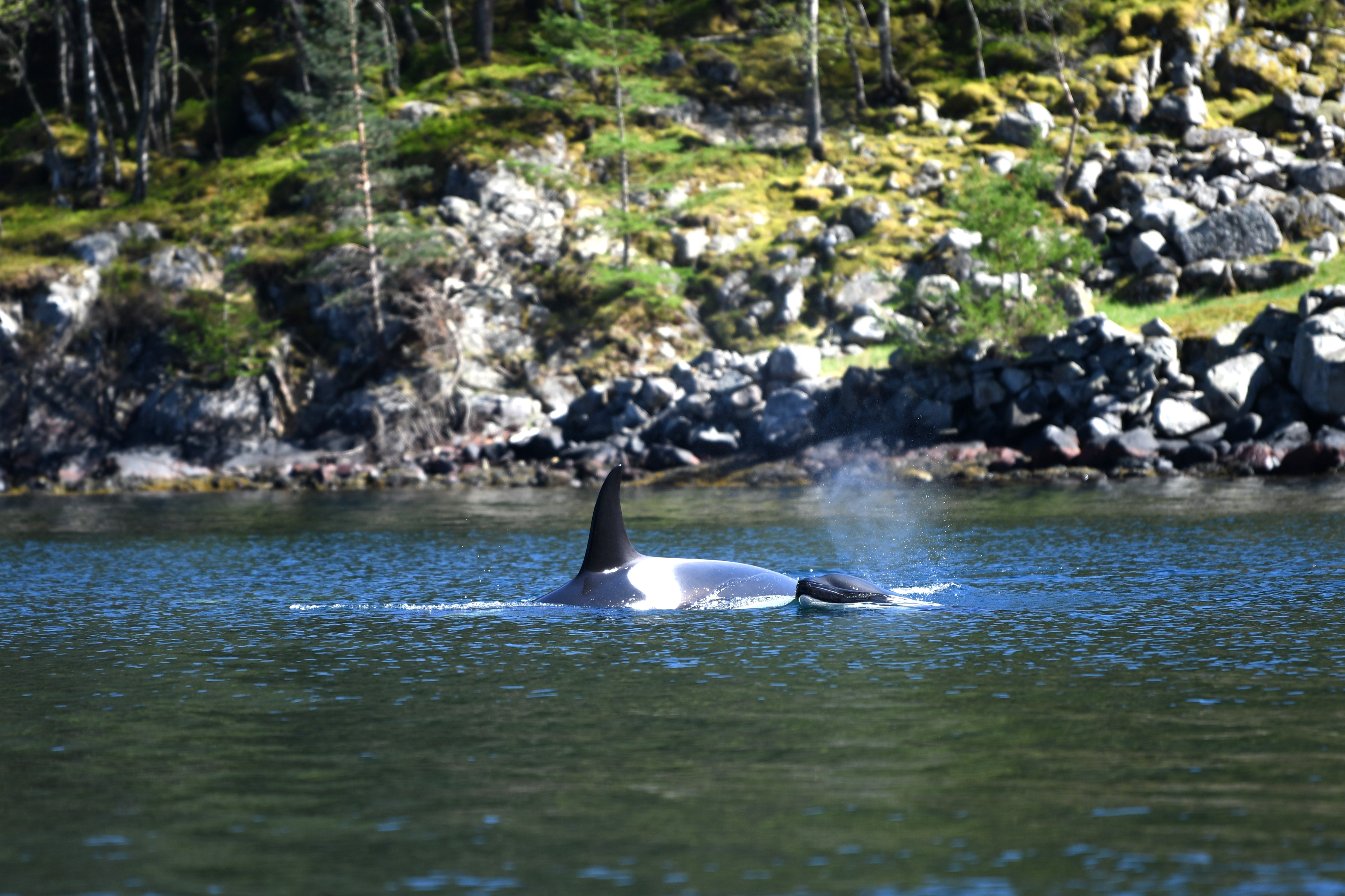
Foto: Carla Freitas / Havforskingsinstituttet
The matriarchs
The results are not unexpected, as killer whales are known to live in matriarchal social units. The researchers also saw this reflected in the whales’ interactions.
The team recorded 274 social interactions — including physical contact between killer whales and synchronized surfacing.
“These interactions were most common between adult females and calves.”
The fact that these interactions occurred primarily in mother-calf pairs may indicate that calves stay close to their mothers to learn how to behave — whether social norms, vocal traditions, or hunting strategies.
The researchers note that the study covers a relatively small number of killer whales over a short period of time.
Nevertheless, it demonstrates the value of combining drone observations with long term monitoring of known individuals to study the whales’ nuanced, close-range interactions.
“The study also demonstrates the central role adult females play in structuring the group’s collective behaviour and in maintaining the social bonds among killer whales,” Freitas concludes.
