



New study explains rising inflow of Atlantic water into the Barents Sea
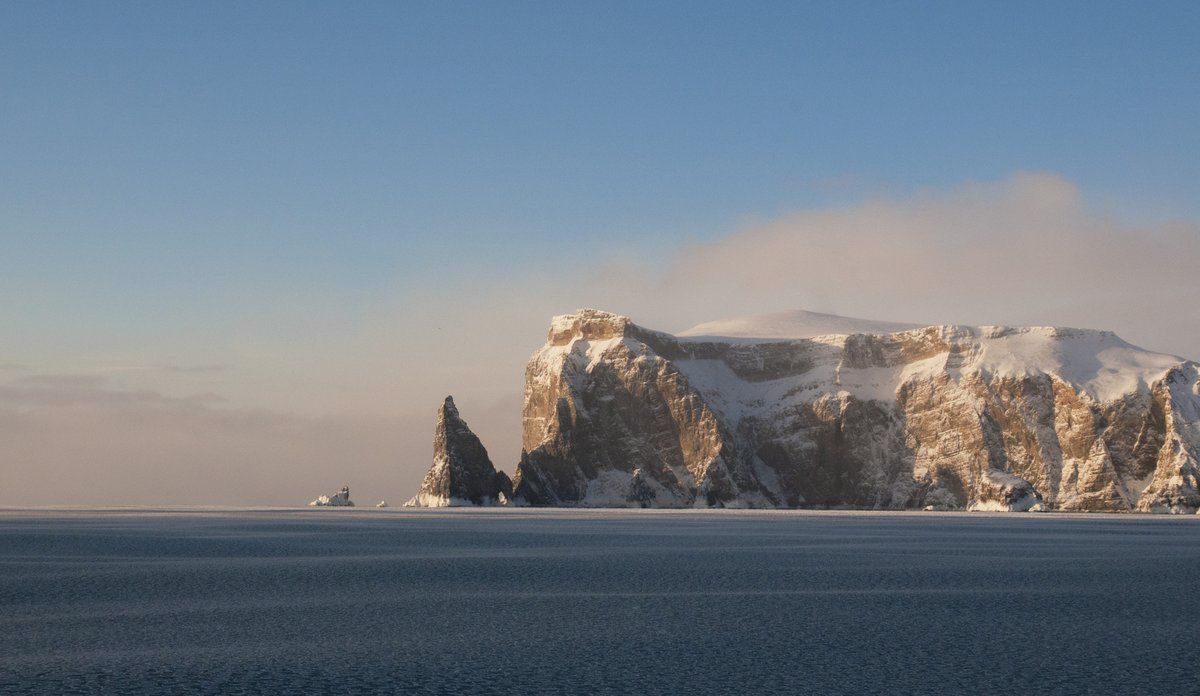
The recent process in which warm waters flow from the Atlantic into the Barents Sea is also called atlantification.
Photo: Monika Sæle / HavforskningsinstituttetPublished: 12.01.2026 Updated: 15.01.2026
Over the past 40 years, the volume of salty waters flowing from the warmer Atlantic Ocean into the Arctic Barents Sea has steadily increased.
However, researchers have been unable to explain why, despite a wide range of hypotheses.
Now, new research offers a possible answer:
“It’s about frequencies,” says oceanographer Robinson Hordoir.
“It’s not about wind strength, as one might assume. It’s about how often low-pressure systems pass over the Nordic Seas.”
The findings have been published in the internationally renowned journal Nature Climate Change.
The atmosphere and the ocean
Atlantic water is transported toward the Arctic through two main pathways: through the Fram Strait west of Svalbard and through the Barents Sea Opening between mainland Norway and Bjørnøya (Bear Island).
The new study explains the increased inflow through the Barents Sea Opening by combining traditional ocean modelling with artificial intelligence.
This approach has enabled ocean scientists to examine links between oceanic and atmospheric data on an hourly basis over a 40-year period.
The researchers have uncovered how changes in how frequently low-pressure systems pass over the Norwegian Sea, the Iceland Sea and the Greenland Sea have weakened a natural barrier in the ocean.
“Low-pressure systems from the southwest pass over the Nordic Seas in a steady stream and generate Rossby waves in the ocean. These waves carry energy and spread according to bottom topography,” explains the oceanographer.
Although Rossby waves oscillate back and forth, they establish residual currents — such as an outward flow through the northern part of the Barents Sea Opening.
“This limits how much Atlantic water flows in,” says Hordoir, continuing:
“But this residual current is weakened as a result of changes in the periodicity of low-pressure passages.”
Frequent weather changes affect ocean currents
The study shows that the ocean current through the Barents Sea Opening is sensitive even to small changes in weather patterns.
“We demonstrate a connection between the frequency of low-pressure systems over the Norwegian Sea, the Iceland Sea and the Greenland Sea, and the inflow of water,” says oceanographer Hordoir.
The northern part of the Barents Sea Opening is particularly affected.
“The findings suggest that human influence on the atmosphere, which gives rise to long-term trends, is altering ocean processes. The ripple effects extend further to sea ice and Arctic ecosystems,” Hordoir concludes.