



We are testing blue mussels in salmon feed
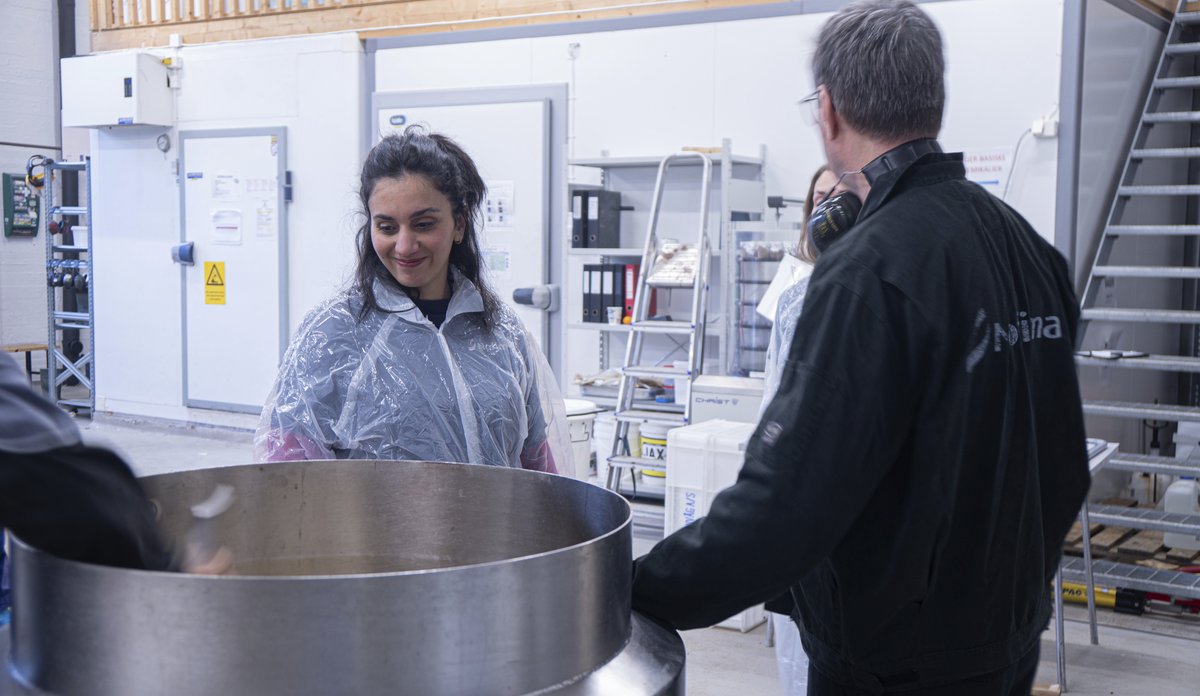
Can blue mussels be Norway’s solution for more sustainable salmon feed?
Photo: Pauline Paolantonacci / IMRPublished: 26.01.2026
IMR scientists will add blue mussels to salmon feed and study how it affects salmon health.
– We want to find out whether blue mussels are safe and nutritious for salmon, and whether processing preserves the nutrients, says marine scientist and project leader Ikram Belghit.
Great potential
– Norway’s long coastline gives the country perhaps the greatest potential for blue mussel production in Europe, says Belghit.
By 2034, all aquaculture feed in Norway must come from sustainable sources, and the share of Norwegian-produced ingredients must increase from just 8 percent today to 25 percent.
The goal is to boost local feed production and reduce environmental impact.
– Today, most aquaculture feed ingredients are imported, says Belghit.
– That’s why we’re investigating the possibility of using blue mussels in salmon feed.
Low input, high value
Blue mussels are a so-called low-trophic species, meaning they sit at the bottom of the food chain.
Blue mussels are easy to farm, require no advanced technology, take up little space, and naturally remove excess nitrogen, phosphorus, and carbon from the water,” says Belghit.
– In addition, they are nutrient-rich and readily available locally. That makes them a strong candidate for more sustainable feed production, she says.
Found the most promising approach
Blue mussel production nevertheless comes with some challenges.
Over the course of two years, researchers have tested several methods to make the best possible use of fresh mussel meat.
Researchers at Nofima’s feed technology centre have produced different types of blue mussel products, which researchers at the Institute of Marine Research (IMR) tested for use in feed.
– Blue mussels have a high water content, which makes preservation and processing challenging, says senior researcher Tor Andreas Samuelsen at Nofima.
– But we have now identified the best way to produce it.
Some processing is necessary to preserve the product and to enable its use in fish feed. However, excessive processing can reduce product quality and often increases energy consumption.
The goal is to produce a high-quality meal in the most cost-effective and sustainable way possible
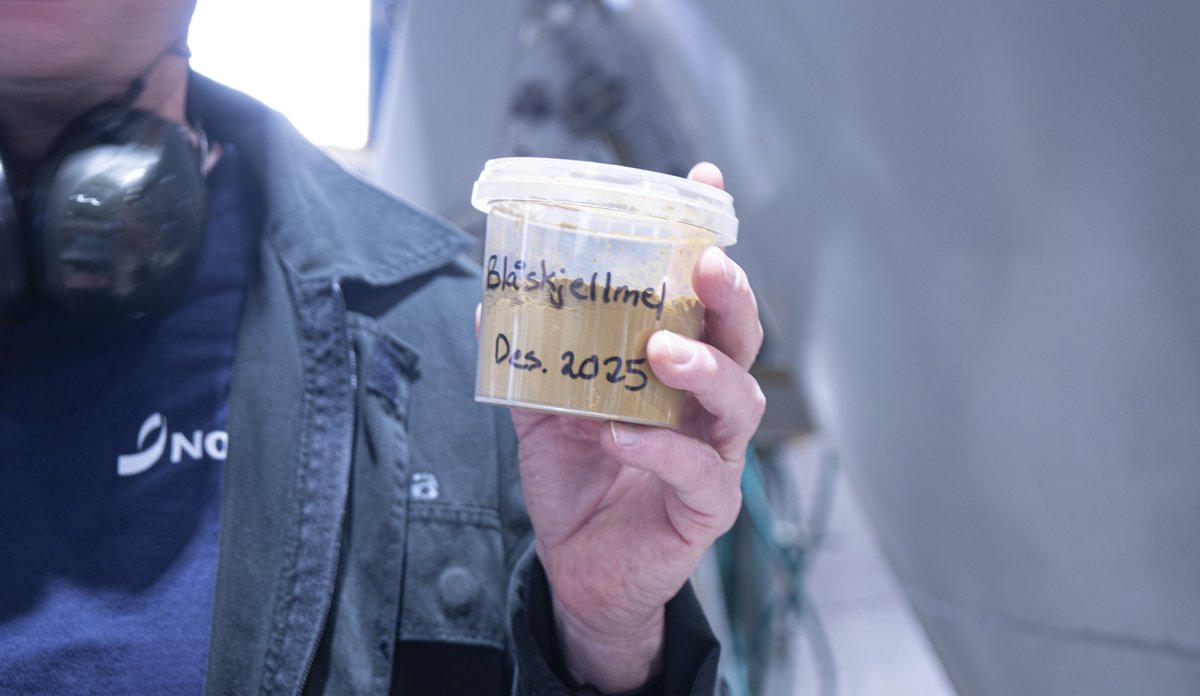
This mussel powder may be the feed of the future.
Photo: Pauline Paolantonacci/Havforskningsinstituttet
Here’s what the ‘mussel slurry’ looks like before it is turned into powder.
Photo: Pauline Paolantonacci / IMRWill be tested on salmon
The final step in the project is to test the new feed on salmon.
– We will study how it affects growth, health, and welfare in the fish. This is essential in determining whether blue mussels can be used commercially, says Belghit.