


The Barents Sea
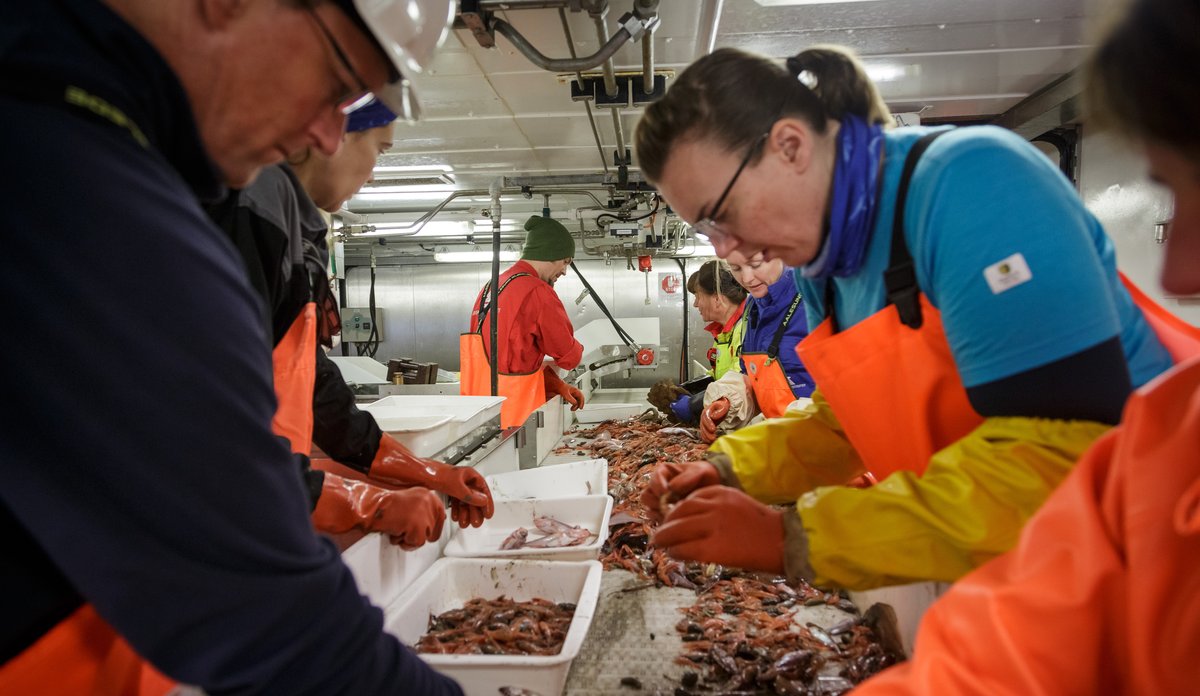
Ecosystem survey in the Barents Sea. Anders Fuglevik, Erlend Langhelle, Irene Huse, Stine Karlsson and Holly Ann Perryman is sorting the catch from a bottom trawl.
Photo: Erlend A. Lorentzen / IMRAt its deepest, the Barents Sea is 500 metres deep, but the average depth is 230 metres. In other words, it is relatively shallow and therefore highly productive. The fish harvested here include cod, haddock, Greenland halibut, American plaice and beaked redfish. Capelin, shrimp, minke whale and harp seals are also caught here.
The temperature and ice cover varies greatly over the course of the year. This is primarily because this is where cold, Arctic waters meet the warmer, saltier waters brought by the Norwegian Current. The mixing ratio and the temperature of the water coming up from the south vary by season.
The Norwegian Current also results in rich and diverse fauna and flora, from small phytoplankton to whales and seabirds. The current carries fish eggs and larvae all the way from Lofoten and Vesterålen to the Barents Sea, where they grow into adults.
The multitude of life in the Barents Sea is dependent on the eggs and larvae delivered by the ocean currents.
Fishery resources in the Barents Sea are managed through a close collaboration between Norway and Russia. This involves the Institute of Marine Research working with the Russian Polar Research Institute of Marine Fisheries and Oceanography (PINRO).
Published: 27.03.2019 Updated: 19.11.2020